First wave artificial intelligence proved that it can recognize the language of a person, detect patterns and assist people with increasingly difficult tasks. However, the majority of these machines sent data to a remote servers to process, and then giving results. Cloud computing, while it accelerated AI adoption, also presented issues in terms of delay and privacy. Also, it added to costs for infrastructure.
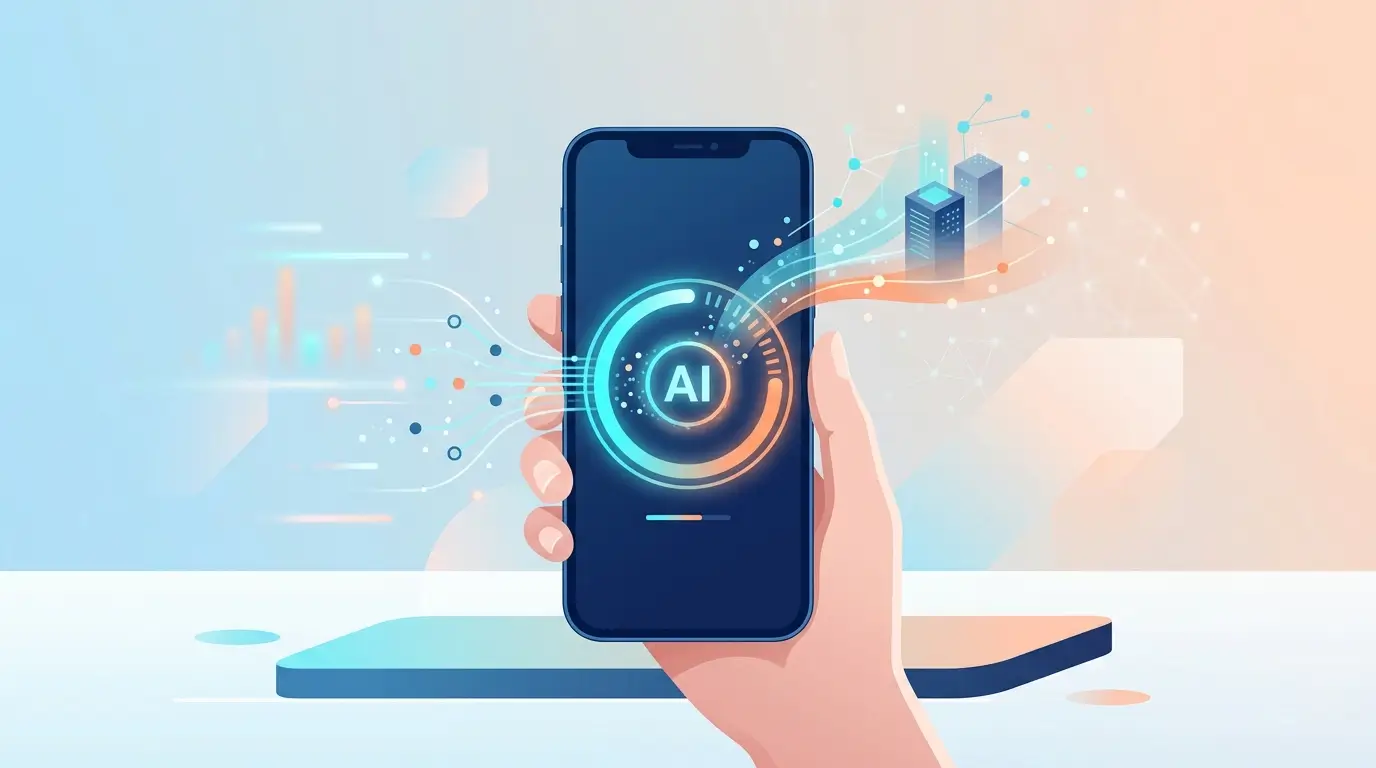
The majority of engineering teams are adopting a fresh approach. Instead of treating artificial intelligence as a remote service, they are developing systems that execute much closer to the place where the decisions are made. This is driving the use of on-device AI that allows applications to be more responsive to changes in the environment, lessen dependence on the infrastructure of an external source, and provide an increased level of control over sensitive information.
Modern AI requires infrastructure that is designed for real-world work
It is now clear for developers that selecting the appropriate language model for the creation of intelligent software does not suffice. Performance is also dependent on the architecture. If an AI application is successful on the production line, it will depend on variables such as runtime efficiency and the ability to observe.
The growing complexity of AI agents has resulted in a greater demand for a stronger AI agent infrastructure that is able to support automated workflows and intelligent decision making. Rather than relying on generic platforms designed for each possibility of use numerous organizations have opted for specific infrastructure that is tailored to their own operational requirements.
Thyn was founded around this philosophy. Instead of delivering a single AI application Thyn develops the foundational runtime engines needed to allow for multiple products to be specialized while allowing each solution to evolve independently. This architecture approach helps engineering teams focus on solving business issues rather than repeatedly rebuilding core infrastructure.
Better tools help developers build better systems
As AI integrates in software products developers require more than APIs. They require environments that facilitate deployments, debuggings, monitoring, testing and runtime management.
Modern AI developer tools increasingly emphasize transparency and control. Developers must know what their systems are doing in production, be able to precisely measure the latency and optimize consumption of resources, without sacrificing reliability or performance.
Thyn invests heavily on the foundations of engineering and focuses more on performance measurement than the general claims made by marketers. Research on runtime and deployment strategies, as well as evaluation frameworks, user experience, and observability are treated as core engineering disciplines which enhance every product within its ecosystem.
The use of specialized intelligence is much more effective than platforms that are one size fits all
Each AI workstation operates under the same circumstances. Cryptographic, financial trading marketing automation, embedded software and autonomous systems all have unique performance requirements, security models, and operational restrictions.
Thyn builds dedicated engines specifically designed for specific domains rather than requiring all applications to use the same technology. It allows for products to be developed in a separate manner, but still benefiting from research into architecture and governance.
AI coding agents are beginning to follow the same principle. Modern coding aids are more targeted and less general. They can help developers automatize repetitive tasks, create code, and review repository data.
More information closer to the decision-making point
Artificial intelligence will go beyond generating information in the future. In the future, systems that are successful will think, analyze context as well as make decisions and take actions with the least amount of delay.
When it comes to products that depend on reliability and responsiveness, as well as privacy, running intelligent software locally can be a significant advantage. On-device AI reduces dependence on networks as well as latency, allowing applications to keep running even when connectivity is not available. This creates smoother user experiences and gives organizations more control of their data and infrastructure.
In the same way, AI agent infrastructure that is scalable ensures intelligent systems are easily observable as well as manageable and able to adapt when requirements change.
Thyn is a paradigm shift in software development. The company is focusing on establishing an institutional base to build intelligent software instead of looking at individual applications. Thyn’s sophisticated runtime architecture and specialized engine, as well as its robust AI development tool and advanced AI code agents are helping to create an environment where AI is more effective, faster, secure, more reliable and ultimately more efficient for those who develop the next generation of intelligent devices.